Library News

Body Beautiful in Ancient Greece

The Body Beautiful in Ancient Greece: Greek and Roman Artworks Travel to Oregon!

Professor Ann Nicgorski, Chair & Professor of Art History and Archaeology, will lecture on The Body Beautiful in Ancient Greece, Thursday, October 25th at 7:30 p.m. in the Paulus Lecture Hall at the Law School.

This fall, the Portland Art Museum is hosting a blockbuster exhibition of Greek and Roman art entitled The Body Beautiful in Ancient Greece (October 6, 2012 to January 6, 2013). There are over 100 exquisite objects in this exhibit, which are all on loan from the renowned British Museum in London.

This lecture provides an overview of the exhibition with a focus on its key themes and selected, noteworthy objects, such as the iconic Discobolus, or discus-thrower, from the 5th century BCE, which will be making its first trip to the United States.  In addition to several other large-scale works of stone sculpture, the exhibit also features smaller figurines in a variety of media, as well as numerous vases with figural decoration. Key themes include the human body and face; character, portrait and realism; gods and goddesses in human form; athletes and Herakles-superman; birth, marriage, sex, and death; and composite human-animal creatures of mythological legend, such as the famous Theban sphinx.

Edward Burger: Teaching to Fail

November 1, 12:30pm – 1:30pm

This NITLE seminar will explore ways to foster creativity and risk-taking in the classroom. Note that this event will not be recorded, so registering and attending in real-time is your only option!

Summary: Although we know that creativity requires the ability to take risks and learn from failures, our students typically are risk-averse and seek to avoid failure at all costs. How then can we foster risk-taking and creativity in our students? In this seminar, Edward B. Burger, Francis Christopher Oakley Third Century Professor of Mathematics at Williams College, will explore the ultimate goals of education, how are we engineering our curriculum and classes to deliver on the promise of those lofty goals, lead a discussion to answer both questions, and celebrate the notion of “failing to succeed.”

Information about the speaker: Edward Burger is the Francis Christopher Oakley Third Century Professor of Mathematics at Williams College, an educational and business consultant, and most recently served as vice provost for strategic educational initiatives at Baylor University. He is the author of over 60 research articles, books, and video series (starring in over 3,000 on-line videos). Dr. Burger has won numerous awards, including the 2000 Northeastern Section of the Mathematical Association of America (MAA) Award for Distinguished Teaching, 2001 MAA Deborah and Franklin Tepper Haimo National Award for Distinguished Teaching of Mathematics, 2003 Residence Life Teaching Award from the University of Colorado at Boulder, Mathematical Association of America’s Chauvenet Prize (2004), Lester R. Ford Prize (2006), and Williams College’s Nelson Bushnell Prize for Scholarship and Teaching (2007). He also received the 2010 Robert Foster Cherry Award for Great Teaching: the largest and most prestigious prize in higher education teaching across all disciplines in the English-speaking world. He was named 2001-2003 Polya Lecturer by the MAA, and in 2007, 2008, and 2011, he received awards for his video work.

View the Full Program

Register online by Tuesday, October 30, 2012.

If you prefer a more social setting, you can also join a small group of viewers in Smullin 6. If you choose to join us there, you do not need to register.

Related Content

Three NITLE Seminars in October

FemTechNet: Networked Course on Feminism and Technology

October 4, 1:00pm – 2:00pm

Online recording available:
Recording
Presentation Slides

FemTechNet is a network of international scholars and artists activated by Alexandra Juhasz and Anne Balsamo to design, implement, and teach the first DOCC (Distributed Online Collaborative Course), a feminist rethinking of the MOOC. The course, Feminist Dialogues on Technology, will be offered in fifteen classrooms, at least one in every continent, in the Fall of 2013. This project uses technology to enable interdisciplinary and international conversation while privileging situated diversity and networked agency. Building the course on a shared set of recorded dialogues with the world’s preeminent thinkers and artists who consider technology through a feminist lens, the rest of the course will be built, and customized for the network’s local classrooms and communities, by network members who submit and evaluate Boundary Objects that Learn—the course’s basic pedagogic instruments.

FemTechNet invites interested scholars and artists to join this project and help build this course. In this seminar, Alexandra Juhasz and Anne Balsamo discuss how this innovative project got started, explore the model of distributed online collaborative courses, and lead a discussion of how FemTechNet or similar courses might fit within the liberal arts curriculum.

Full program description.

Stories of the Susquehanna: : Digital Humanities, Spatial Thinking, and Telling the historia of the Environment

October 9, 11:00am – 12:00pm

Online recording available: Stories of the Susquehanna

Collaborative student-faculty research projects centered in the locale of residential liberal arts colleges let students engage in a variety of learning experiences and high impact practices including undergraduate research, civic engagement, and multidisciplinary approaches to complex problems. Students at Bucknell University, as part of the Stories of the Susquehanna Valley Project, gathered stories from the Marcellus Shale region in the Susquehanna watershed of how the boom in natural gas drilling is transforming communities and cultural landscapes. This seminar will explore the possibilities digital humanities offers students to incorporate technologies such as ArcGIS and Google Earth into storytelling of their environment. Focusing on the full length of the Susquehanna River, Katherine Faull, Professor of German and Humanities and Alf Siewers, Associate Professor of English at Bucknell University, will provide examples and lead discussion of how students’ digital learning may foster cooperation between universities, public agencies (local, regional and national) and NGOs in successful efforts to raise environmental awareness.

Full program description.

Evaluating Digital Scholarship

October 10, 1:00pm – 2:00pm

Online recording available:
Recording
Presentation Slides

While a number of professional organizations have produced valuable guidelines for evaluation of digital work, many colleges and universities have yet to establish clear protocols and practices for applying them. Alison Byerly, College Professor and former Provost and Executive Vice President at Middlebury College, who has co-led workshops on evaluating digital scholarship at the MLA convention, will review major issues to be considered in the evaluation of digital work, such as: presentation of medium-specific materials, documentation of multiple roles in collaborative work, changing forms of peer review, and identification of appropriate reviewers. She will then talk briefly about how these issues can best be approached from the perspective of the candidate who wishes to present his or her work effectively to review committees, as well as from the perspective of colleagues who wish to provide a well-informed evaluation of such work.

Full program description.

Participation in NITLE Seminars is open to all active member institutions of the NITLE Network as a benefit of membership and as space allows. No additional registration fee applies.

Forum on Politics in 2012

In this political season, when so many are frustrated by the narrowness of the public debate, we are happy to invite you to participate in a Forum on Politics 2012 on Wednesday, September 26, 2012, 7:30-9:00 PM, in the Hatfield Room, Hatfield Library. In this public conversation we hope to address issues such as sustainability, the ethics of drone warfare, immigration, and the future of political activism that have largely been absent from political coverage.

Please join us for a Forum on Politics in 2012:  What is missing? What is to be done?


A public conversation with:

James Miller, Professor of Political Science and Liberal Studies, New School of Social Research

Roy Perez, Assistant Professor of English and American Ethnic Studies

Jonneke Koomen, Assistant Professor of Politics

Joe Bowersox, Professor of Environmental & Earth Sciences

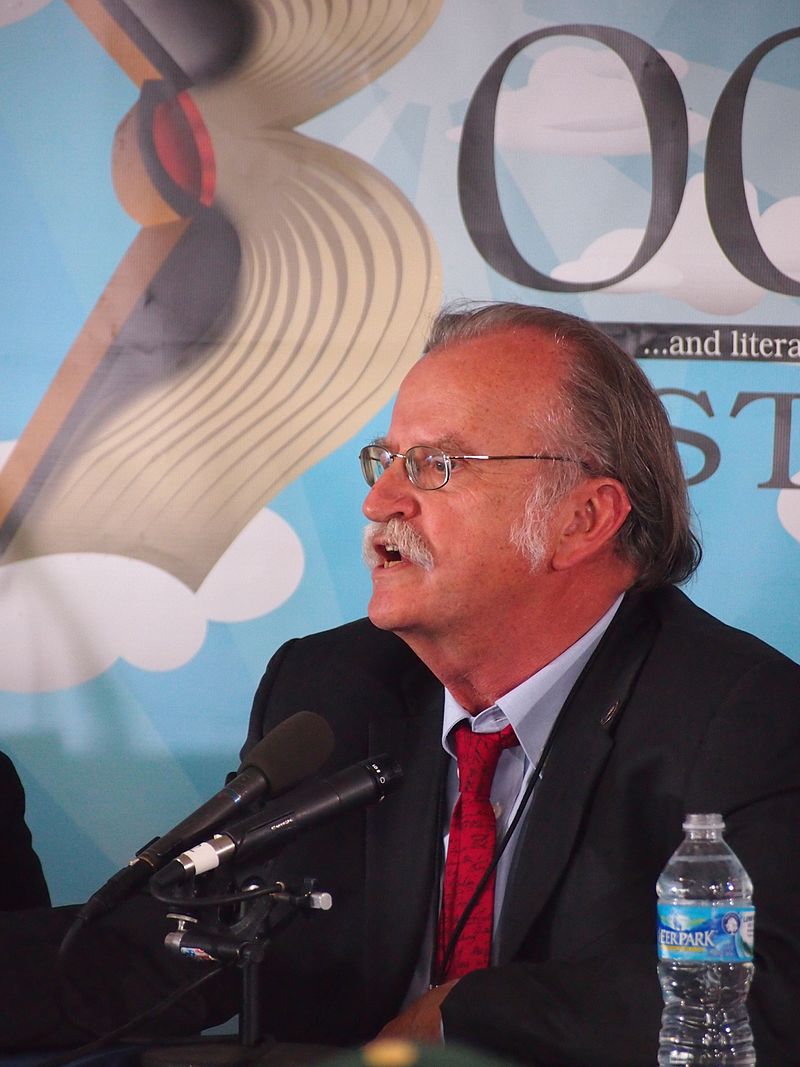
John Frohnmayer, Former Chair of the National Endowment of the Arts, Attorney, Author and Activist.

Moderator:  David Gutterman, Associate Professor of Politics


Sponsored by:
Department of Politics
Office of the Dean of Campus Life
Office of the Chaplain
Center for Religion, Law & Democracy 

WU Archives Now Open

Summer renovations of the University Archives and Special Collections are now complete. The remodeled and expanded area re-opened to the public on Monday, September 17th.


The renovations provide a newly expanded reading room for researchers. The most noticeable of the improvements is the new wide entry way trimmed with glass, and the Archives are immediately visible upon entering the second floor of the library.


The renovations were made possible by a generous gift from the Class of 1957 (Thank you again Class of ’57!).


Archives and Special Collections has also undergone a virtual remodel with a newly re-designed website. We invite you to visit both of our spaces!

Online Resources and In-Class Interaction

Thursday, September 20, 1-2pm

Faculty, instructional technologists, librarians, and others from the NITLE Network interested in effective design for blended learning methods and open educational resources at liberal arts colleges are invited to attend this seminar. Attendance by institutional teams is encouraged; individuals are also welcome to participate. (Times EDT)

Hosted online via NITLE’s videoconferencing platform

Description

As the terms “flipping the classroom” and “blended learning” continue to garner attention, liberal arts institutions are evaluating the role that these frameworks can play on residential campuses. While the buzzwords are novel, the goal of enhancing student engagement during in-class meetings has long been a staple of our work. Effective classroom teachers are designers who strive to create environments—whether physical or digital—that set the stage for rigorous, robust, analytical, and dynamic in-class interactions leading to deeper learning. Simply putting students in groups after they’ve watched a lecture online to solve poorly designed problems is a recipe for failure and frustration.

In this session, our presenters will share information about two projects to create open educational resources for blended learning (funded by the Associated Colleges of the South) and discuss the instructional design principles that guided their development. Analyzing and Creating Maps involved a collaboration between Furman and Trinity Universities to develop self-contained modules usable in any course in which mapping plays an important role. A similar collaboration between the University of Richmond and Furman University resulted in the development of Beyond the (Online) Handbook: Writing Resources Designed for the Digital Environment, an online resource designed to support writing-intensive courses. Both projects produced resources designed to support in-class activities, rather than replace classroom interactions. Beginning with feedback on these projects, participants will discuss useful design paradigms for maximizing the effectiveness of in- and out-of-class assignments at liberal arts colleges.

Blended Learning in a Liberal Arts Setting


Online recording available: View Recording.


September 12, 1:00pm – 2:00pm

Faculty, instructional technologists, librarians, and others from the NITLE Network who are interested in integrated blended learning methods at liberal arts colleges are invited to attend this seminar. Attendance by institutional teams is encouraged; individuals are also welcome to participate.

Hosted online via NITLE’s videoconferencing platform

Description

Blended learning has been widely adopted at large universities and community colleges, and learning sciences research has shown that this approach can increase student engagement, performance, and persistence in those settings. Liberal arts colleges, however, have been much slower to explore blended learning, in part due to uncertainty about its value and appropriateness in a smaller, more intimate setting.

In 2011–2012 Bryn Mawr College, with funding from a Next Generation Learning Challenge Grant, began studying the impact of blended learning approaches—defined loosely as courses in which students both participate in face-to-face classes and work through computer-based, interactive tutorials and quizzes that provide customized learning and instant feedback—within a liberal arts environment, with a focus on introductory science and mathematics (STEM) courses. In this seminar, Dr. Jennifer Spohrer, Educational Technologist at Bryn Mawr College, will share findings of this study, as well as ongoing and future research of this initiative and lead a discussion of how best to integrate blended learning approaches in a liberal arts context.

Speaker Biography

Dr. Jennifer Spohrer is an instructional technologist in the Provost’s Office at Bryn Mawr College and project coordinator for the Next Generation Learning Challenge grant, “Using Blended Learning in a Liberal Arts Environment to Improve Developmental and Gatekeeper STEM Course Completion, Persistence, and College Completion.” She draws on her previous experience as a faculty member and in technical support to assist faculty in identifying their pedagogical challenges and goals, researching and evaluating technologies that can help address or meet them, and integrating those technologies into their teaching in effective ways.

Digital Field Scholarship Video Conference

Online recording available: Recording of Digital Field Scholarship.  

Presentation slides: The mindomo presentation used by the seminar leader is available here: bit.ly/dfsnitle2012

Finally, the CFP to join the Digital Field Scholarship Sandbox is here: call for proposals


NITLE, the National Institute for Technology in Liberal Arts, will host a video conference about Digital Field Scholarship at Lewis and Clark College on August 29th, 1-2pm (PST).

Faculty, instructional technologists, librarians, and others from the NITLE Network who are interested in digital field scholarship, inquiry-guided learning, and undergraduate research in all disciplines are encouraged to attend this seminar in institutional teams. Individuals are also welcome to participate.  Hosted online via NITLE’s videoconferencing platform.

Registration

If you want to attend and cannot join us in Smullin 6, you can register online by Monday, August 27. Participation in NITLE Seminars is open to all active member institutions of the NITLE Network as a benefit of membership and as space allows. No additional registration fee applies.

Description

From service in the local community to a wide array of overseas programs, liberal arts students and faculty pursue learning opportunities in a variety of geographical settings, with areas of focus spanning the physical and life sciences, social sciences, and arts and humanities. Many projects enhance field scholarship via geolocated digital means, such as capture and communication of field data, web discovery and sharing of field-applicable resources, creative projects built on particular locations and shared as digital narratives, and place-based student-faculty research projects documented online from start to finish. In this seminar, Dr. James Proctor, Professor, Environmental Studies Program, Lewis and Clark College, will share

  1. An introduction to Digital Field Scholarship and the objectives of a new Sandbox initiative, designed and administered by Lewis & Clark College.
  2. An extended example of one approach to Digital Field Scholarship involving geolocation and WordPress-based collaboration, and how it supports liberal education via Lewis & Clark’s Situating the Global Environment (sge.lclark.edu) initiative.
  3. An invitation for other institutions to collaborate in a 2012-13 Digital Field Scholarship Sandbox, with clarification of objectives, expectations, and process.

Speaker Biography

Dr. James Proctor is a professor in the Environmental Studies Program at Lewis and Clark College. Dr. Proctor comes from a varied academic background including geography, religious studies, and environmental science/engineering, with research interests and publications spanning environmental theory, interdisciplinarity, and new learning technologies. Since arriving at Lewis & Clark College in 2005, Dr. Proctor has received strong support from The Andrew W. Mellon Foundation to develop innovative approaches in interdisciplinary undergraduate environmental scholarship. Most recently, Dr. Proctor directs Lewis and Clark’s Situating the Global Environment initiative, which he presented at the NITLE Symposium in April 2012. Dr. Proctor led the team whose proposal on digital field scholarship won the Innovation Marketplace at the Symposium.

New Library Web Site

Screen ShotThe library is introducing a new web site in June.  The initial update happened on Tuesday, June 12. The following weeks will be spent refining the  design and completing work on less obvious components.  We ask your patience during the transition.

One of our goals is to better organize and feature the many research guides that library staff have developed.  The Guides section of the library site provides students and faculty with helpful information on research techniques, topics and tools.

In addition, the new web site provides a quick starting point for using the catalog discovery interface (WorldCat Local), over 190 research databases, our journal title finder and reserves.  A new “chat with a librarian” service is available on the home page for real-time online help when the reference desk is staffed.  The announcement you’re reading uses a WordPress blog theme that was developed as part of the redesign effort.  Watch for more improvements.

Randy Hayes: Unfamiliar Territory

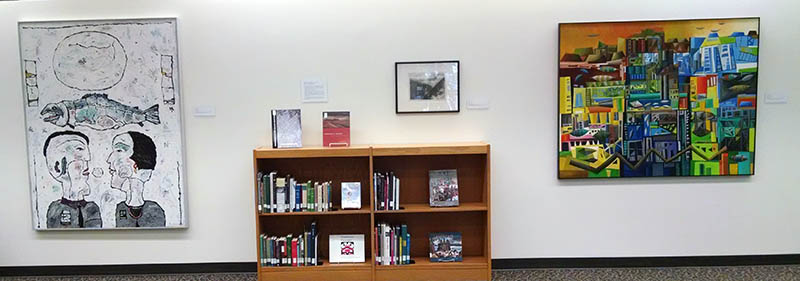
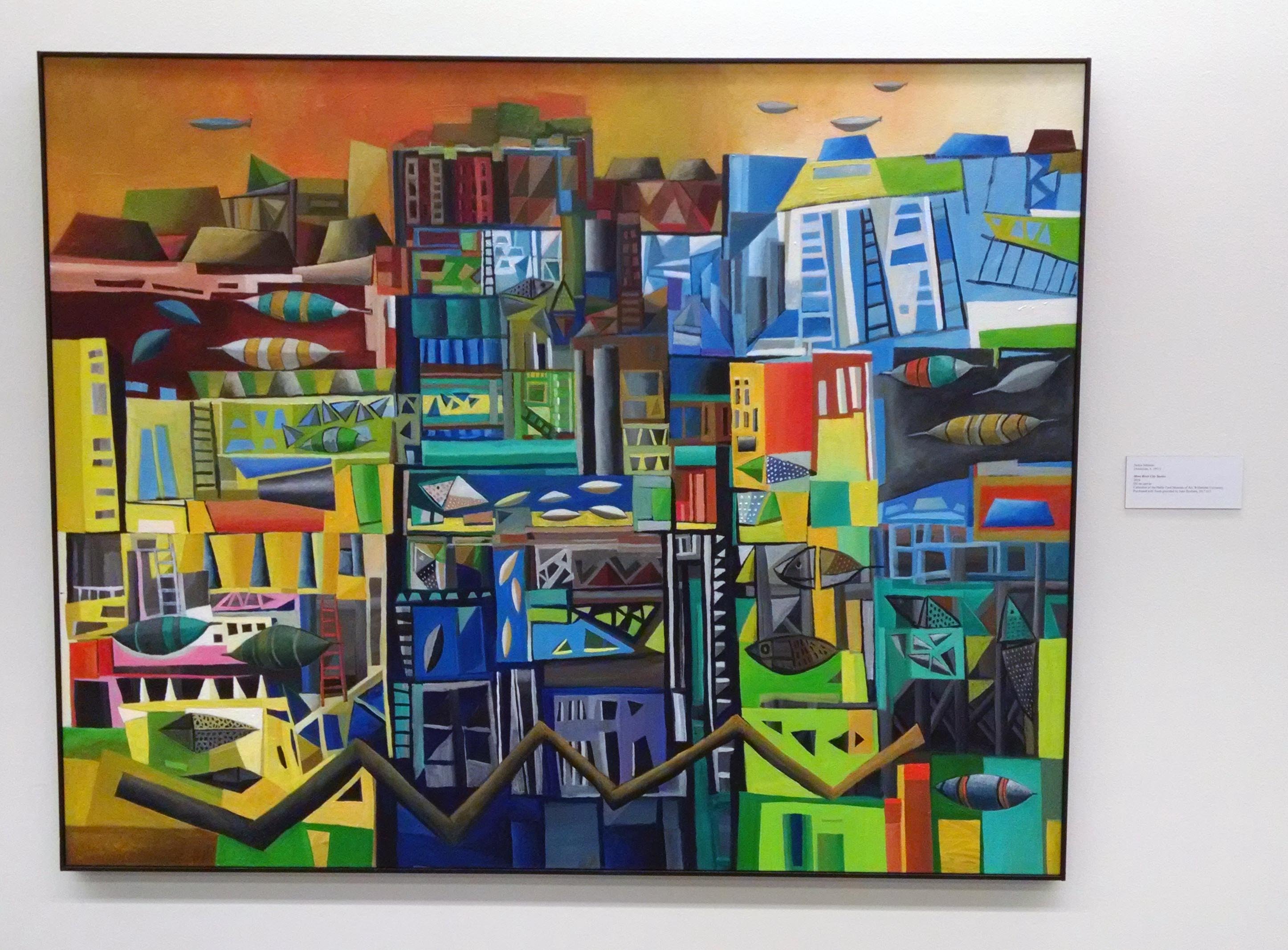
Randy Hayes is a highly regarded Seattle painter and photographer who creates mixed media works based on his travels to Europe and Asia and his ongoing relationship with the American South, especially his birthplace of Mississippi. A major exhibition of Hayes’ work, Randy Hayes: Unfamiliar Territory, will open June 2 and continue through August 26, 2012, at the Hallie Ford Museum of Art at Willamette University in Salem, Oregon.

Born in Jackson, Mississippi in 1944, Hayes spent his early childhood in the South. After graduation from high school in Tupelo, Mississippi in 1962, he attended Rhodes College and the Memphis College of Art, where he earned his BFA degree in sculpture in 1966. He moved to Seattle the same year to work as a Vista volunteer, and in the early 1970s he moved to Boston to work as a freelance painter and set designer for the PBS affiliate, WGBH. He returned to Seattle in the mid-1970s and has lived there ever since.

More information